
After a long Sunday run, I realized the warm days of summer are upon us, and with that comes the importance of hydration.
During cooler months, which in the Pacific Northwest run October through April, I reinforce to the team the value of healthy eating. Aside from optimizing performance and aiding in recovery, an additional role food plays is in warming our bodies from the inside, as one of the biproducts of digestion is heat. Couple that with dressing in layers, and the kids are primed to run and play outside.
On the flipside, May through September is the season of supporting optimal eating with appropriate cooling through consuming the right foods and plenty of water, and what better foods than the following?
Watermelon, watermelon, and watermelon.
Other fruits: Strawberries, cantaloupe, oranges, grapefruits, peaches, pineapple, blueberries, and any delicious apple option you can find.
Vegetables: Cucumbers, carrots, celery, zucchini, lettuce, tomatoes, bell peppers, bok choy, cabbage, cauliflower, broccoli, and spinach.
There are plenty more, and a quick trip around the handy WebMd site will even tell you the micronutrients found within many of these delicious options!
The first time I truly felt any sense of nutrient deficiency was during one of a handful of Hood to Coast experiences in the early 2000’s. After slugging through my final leg in 2009, which I believe was leg number 35, I found enough energy to b-line it to the team van where only bliss awaited me - a bowel of fruit and a bag of mixed nuts. As my vision narrowed, nothing else mattered, I was locked in. Door, open, food, mouth. Within minutes, I could feel the cells of my body recalibrating to normalcy.
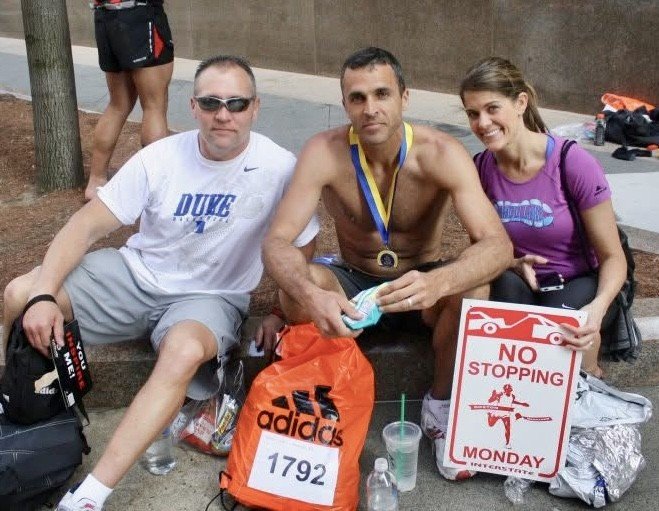
Mike, myself, and my bride, when we were young.
Boston 2012 had a similar experience. The heat was brutal – one of the top-10 hottest Boston Marathons in it’s 130 years. As dialed-in as my nutrition and hydration were, nothing could have prepared runners for the 89° temps that reflected off the windows of the buildings, scorching us like ants under a magnifying glass.
Fast forward through many similar experiences with the heat, and we come to Sunday, May 3, 2026. Four miles into a Sunday run and I made the decision to peal away early from my running partner, Micah, opting for the shorter 9-mile route. Having gone under the knife just eight months prior and still finding my way back, a 9-mile run is my current ceiling, and until I feel more confident with my Achilles and fitness, anything longer would have only degraded the run further. Returning back to the trailhead, the water fountain was a glorious sight. Even better was that it worked – nice job, City of Camas.
While Sunday wasn’t nearly as bad as past experiences, it certainly serves as a reminder that bodily cells need nutrients, and proper fueling matters - not in the form of energy drinks or crappy foods, but in the form of whole foods, water, and responsible eating.
Upon my quest to support this post, I was reminded of the time Kristen Myklebust spoke with our team about fueling for optimal performance in 2022. We’ve been fortunate to have some outstanding presenters speak on the not-so-easy-and-sometimes-confusing topic of nutrition during our annual health seminars during Winter Training, and a handful of their presentations can be found on the Whisper Sports Physicals page.
Chug! Chug! Chug! Chug!
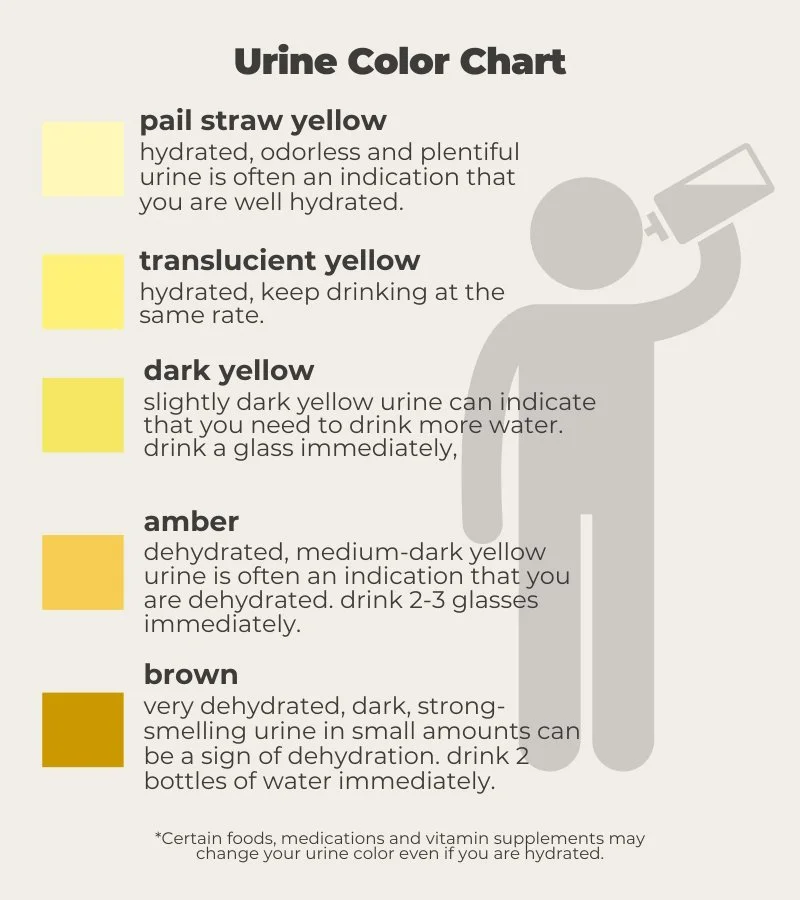
Image from centralmourology.com.
So what’s the current recommendation for water intake? The general rule of thumb is 2-4 liters per person per day, but as you might have guessed, it depends on a number of factors, like water intake from other foods (i.e., the good stuff mentioned above), body size, activity levels, medications, among other things. To know whether you’ve consumed an adequate amount, the ole’ eyeball test should work! See the handy urine color chart at right.
Additional benefits of adequate water consumption includes lubricating joints, regulating body temperature (the point of this post), increases mental (and cognitive) acuity, increases muscle and tendon ranges of motion, and more.
Finally, before venturing out for a run, consuming a glass of water prior is a great way to set yourself up for success. Not necessarily chugging it all at once, but casually, like while you’re getting dressed, tying your shoes, and setting your watch. Of course, one should come to practice well-hydrated, but that’s not always the case, so consuming water during runs or workouts should come in small doses, just enough to get your mouth wet, and no large gulps.
For more information on water intake, check out How Much Water Should You Drink on the Harvard.edu website.